
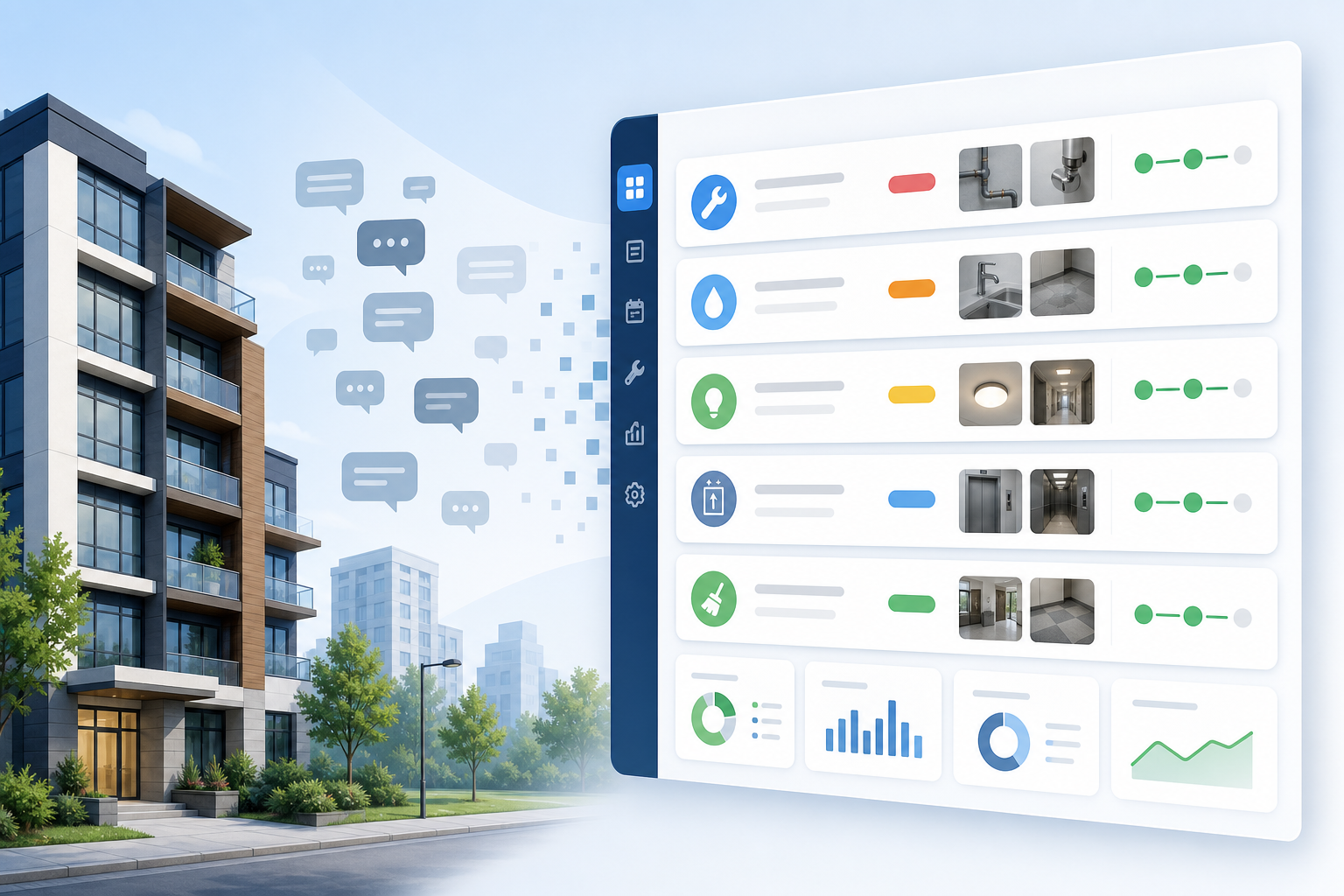
Common-area issues move faster when every report has an owner, status, history, and next action. Here is a practical workflow condominium boards and managers can use to turn scattered messages into transparent repairs.
In many condominiums, common-area problems start in the fastest possible place: a message in a residents’ chat. A broken entrance light, a leaking garage pipe, a blocked lift, or damage in the lobby can be reported in seconds. The problem is what happens after that first message. Photos get buried, the same issue is reported several times, nobody is sure who contacted the supplier, and residents keep asking for updates because there is no single source of truth.
That does not mean informal messages are bad. They are useful for quick alerts. But they are not a reliable management system. A condominium needs a simple workflow that turns each report into a traceable request: what happened, where it happened, who is responsible, what has been done, and what is waiting next.
Start with one clear intake point
The first step is to define where common-area issues should be reported. Ideally, residents should use a form, portal, or app where they can add the location, category, description, photos, and urgency. If a board member receives an issue by phone or chat, they can still create the request in the same place. The important rule is simple: every issue must end up in the shared register.
This avoids duplicate work and makes it easier to compare priorities. A water leak near electrical equipment should not compete equally with a cosmetic scratch on a wall. When all reports use the same structure, the board or manager can triage instead of chasing context across conversations.
Classify urgency before assigning work
Not every issue needs the same response. A useful workflow separates urgent safety or access problems from routine maintenance and improvement suggestions. For example, urgent issues may require immediate supplier contact and resident notification, while routine issues can be grouped into the weekly maintenance review.
Classification also helps expectations. Residents are less frustrated when they can see that an issue was received, marked as routine, and scheduled for review. Silence creates pressure; visible status reduces it.
Assign an owner and record the next action
A request without an owner is only a note. Each issue should have one responsible person, even if several people contribute. The owner does not need to fix the problem personally. Their role is to make sure the next action happens: request a quote, call the maintenance provider, approve a visit, ask for more information, or close the case when solved.
For each request, record the next action in plain language. “Awaiting plumber quote”, “Visit scheduled for Tuesday”, or “Waiting for assembly approval” is far more useful than a vague “in progress”. This small habit prevents many follow-up messages.
Keep the history attached to the issue
Photos, supplier emails, quotes, decisions, visit notes, and invoices should stay connected to the original issue. This matters for transparency today and for memory tomorrow. If the same problem appears again in six months, the condominium can quickly see what was tried before, which supplier attended, and whether the repair was temporary or definitive.
Good records also make board transitions easier. New board members should not have to reconstruct maintenance history from private inboxes and old chat threads.
Close the loop with residents
When the work is complete, close the request with a short final note: what was done, when it was done, and whether any follow-up is needed. If the issue affects residents directly, share the update through the normal condominium communication channel. A visible closure builds trust because residents can see that reports do not disappear.
The goal is not bureaucracy. The goal is calm execution. A traceable workflow helps boards and managers respond faster, spend less time repeating updates, and make decisions with better information. Condmize helps condominium teams centralize records, communication, and follow-up so common-area issues move from scattered messages to clear action.