
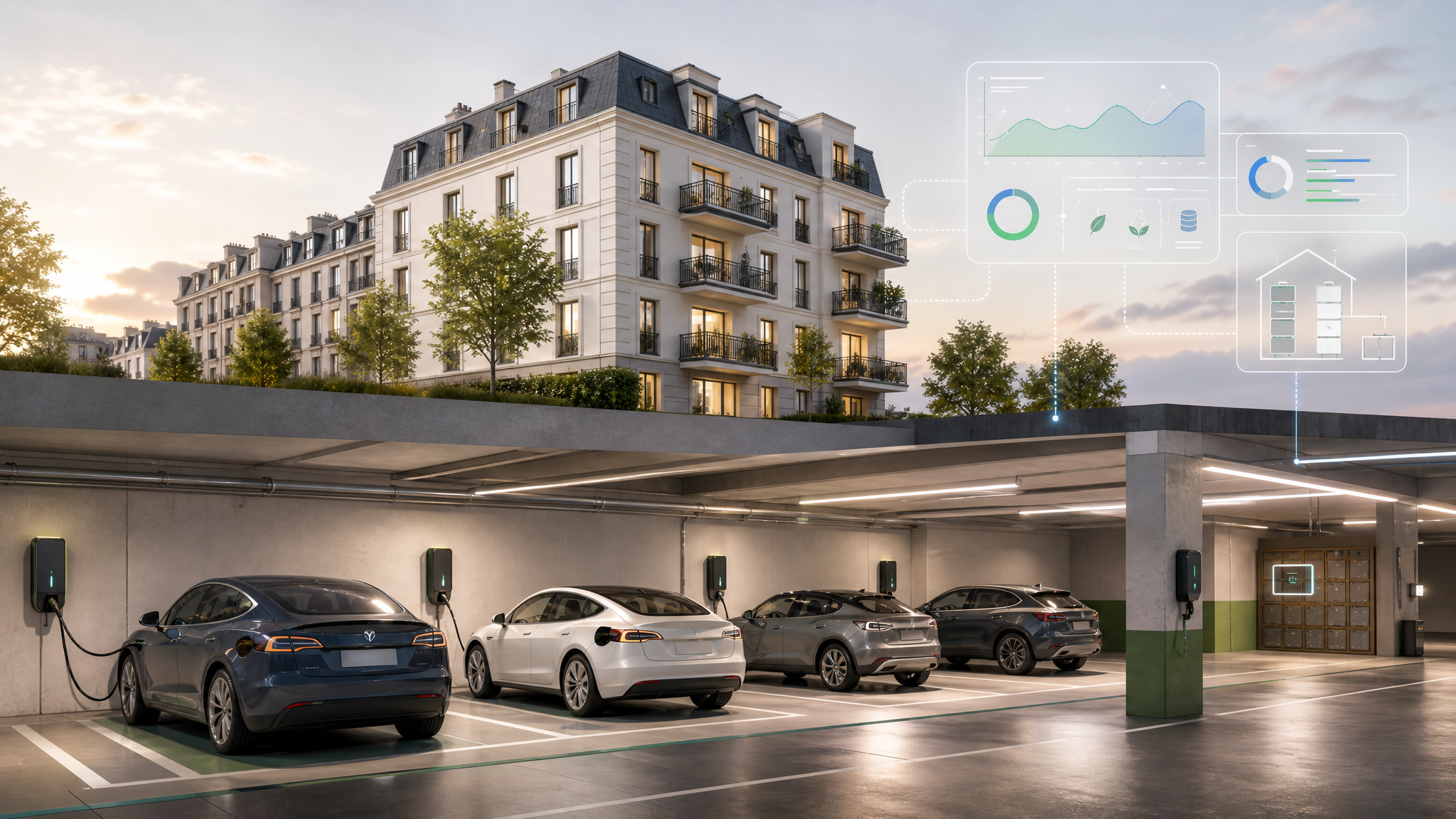
Electric vehicles are becoming part of everyday condominium life. Learn how buildings can plan safe installations, fair cost sharing, and scalable charging policies.
Electric vehicles are no longer a future trend. They are already arriving in condominium garages, and residents increasingly expect to charge at home. For condominium managers and owners, this creates an important question: how can the building support electric cars safely, fairly, and without creating unnecessary conflict?
Why EV charging needs condominium planning
Charging an electric car at home is convenient, but a condominium is not the same as a single-family house. Parking areas, electrical infrastructure, cable routes, meters, and common spaces may be shared or regulated by the condominium. If there is no clear process, a simple charger request can quickly become a dispute about permissions, safety, and costs.
A good EV charging policy helps everyone understand what is allowed, who pays, and how installations must be carried out. It also protects the building from improvised solutions that may create technical or safety risks.
Start with the electrical capacity
Before approving multiple chargers, the condominium should assess the building’s electrical system. Older buildings may not have enough available capacity for several cars charging at the same time. A qualified technical evaluation can identify available power, required upgrades, safe cable routes, metering options, and future expansion needs.
This first step is especially important because EV demand usually grows over time. Planning only for the first one or two vehicles may be cheaper today but more expensive later if walls, ducts, panels, or meters need to be changed repeatedly.
Choose the right charging model
Some condominiums allow residents to install individual chargers in their private parking spaces, especially when consumption can be measured separately. Others prefer shared charging stations managed by the condominium or a charging provider. Both approaches can work.
Individual chargers offer convenience and independence. Shared chargers may be easier to manage in buildings with limited spaces, rotating parking, or complex electrical layouts. The best model depends on the building design, number of expected users, budget, and administrative capacity.
Make costs transparent and fair
Fairness is usually the most sensitive issue. Residents without electric cars may be concerned about paying for infrastructure they do not use. Residents with electric cars need clarity about their installation, electricity, and maintenance costs.
The condominium should separate general infrastructure improvements, individual charger installation, electricity consumption, maintenance, and future upgrades. Whenever possible, charging consumption should be measured separately and paid by the user. Transparent accounting reduces objections and makes decisions easier to approve.
Create clear rules before demand increases
A written EV charging policy should explain how residents request installation, which technical requirements apply, who may carry out the work, how consumption is billed, who maintains the equipment, and what happens if the building needs future upgrades.
The policy should be approved through the condominium’s normal decision process and reviewed as demand changes. It should be practical, not overly complex, and aligned with applicable local rules.
EV charging is becoming part of modern condominium management
Electric cars affect more than parking spaces. They influence infrastructure planning, budgeting, resident satisfaction, and the long-term value of the building. Condominiums that prepare early can avoid rushed decisions, reduce conflicts, and make the property more attractive to current and future residents.
The best approach combines technical evaluation, clear governance, fair billing, and a scalable plan. With the right preparation, EV charging can become a manageable improvement rather than a source of friction.